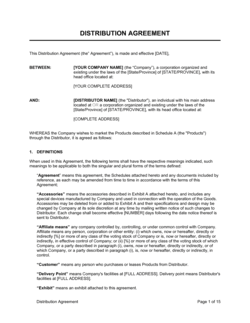
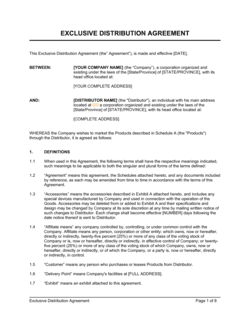
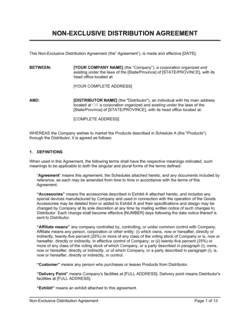
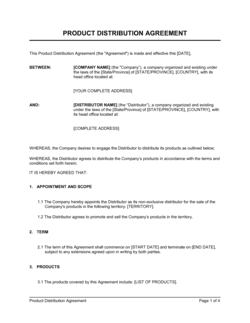
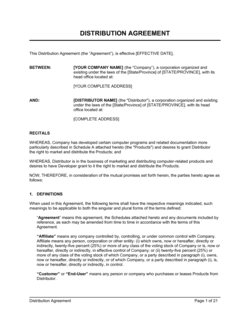
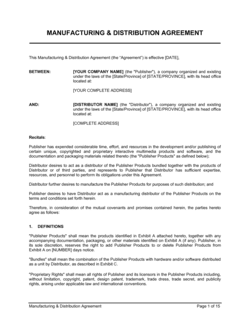
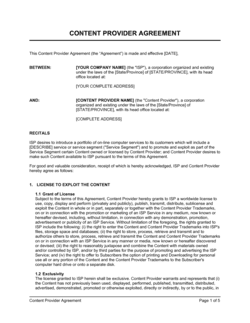
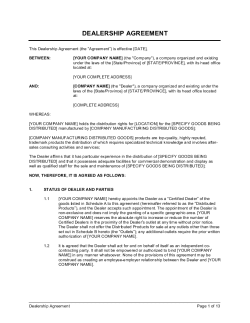
A distribution agreement is a contract between a supplier and a distributor that grants the distributor the right to sell the supplier's products within a defined territory or channel. It sets out pricing, exclusivity, performance targets, IP usage rights, and what happens when the relationship ends. Without one, the terms of the commercial relationship are undefined and disputes become expensive to resolve.
What's the difference between an exclusive and non-exclusive distribution agreement?
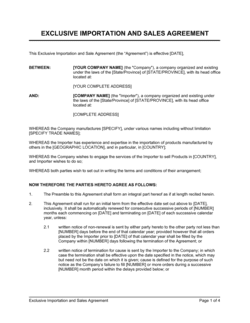
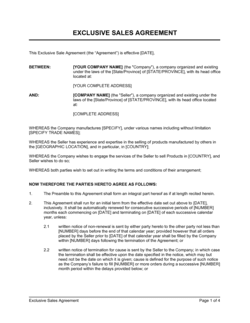
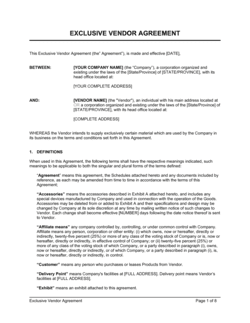
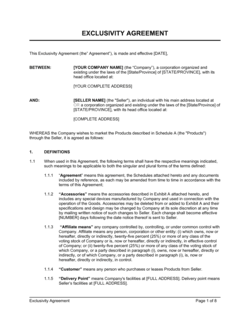
An exclusive distribution agreement gives one distributor the sole right to sell in a specific territory, meaning the supplier cannot appoint anyone else there. A non-exclusive agreement allows the supplier to appoint multiple distributors in the same territory at the same time. Exclusivity is typically granted in exchange for minimum purchase commitments or sales targets to ensure the distributor actively develops the market.
Do I need a distribution agreement for software?
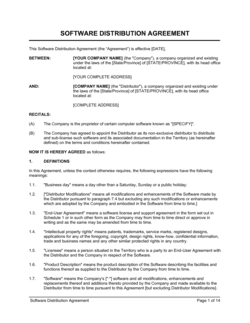
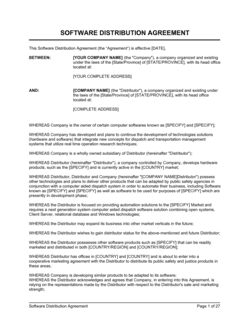
Yes. Software distribution raises additional issues that a standard goods agreement doesn't cover: end-user license pass-through, restrictions on copying, support obligations, and what happens to sub-licenses on termination. Use a dedicated software distribution agreement to address those terms rather than adapting a physical-goods template.
Can a distribution agreement be terminated early?
Yes. Most distribution agreements include provisions for termination for cause — breach, insolvency, or failure to meet performance targets — and sometimes for convenience with a notice period. The termination clause should address what happens to unsold inventory, ongoing orders, and any sub-distributor relationships the distributor has created.
What is a reseller agreement and how does it differ from a distribution agreement?
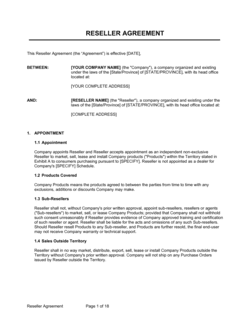
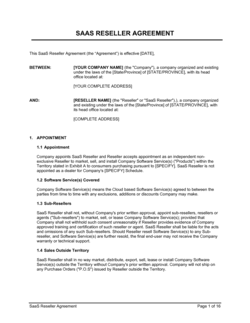
A reseller agreement authorizes a partner to sell your product or service to end customers, often without taking title to inventory. A distribution agreement typically involves the distributor purchasing products outright and reselling at their own margin. In software and SaaS, the distinction blurs — the key question is whether the partner carries credit risk and takes title, or simply earns a fee on sales they facilitate.
What minimum performance obligations should I include?
Minimum performance obligations — also called minimum purchase commitments or sales targets — protect the supplier in exclusive arrangements by ensuring the distributor actively sells rather than sitting on the rights. Common metrics include minimum annual purchase volumes, minimum end-customer revenue, or a specified number of new accounts per period. Tie the obligation to a remedy: typically the right to convert exclusivity to non-exclusive or terminate.
Are distribution agreements enforceable internationally?
Generally yes, but enforcement depends on the governing law clause and the jurisdictions involved. Cross-border distribution agreements should specify governing law, the forum for disputes (arbitration is often preferable to litigation across borders), and account for local competition law restrictions on exclusive territories in markets like the EU. Consider local counsel review for agreements spanning multiple countries.
Do I need a lawyer to draft a distribution agreement?
A well-structured template covers the essential terms for most standard distributor relationships. Engage a lawyer when the deal involves significant exclusivity commitments, cross-border territories with competition-law implications, large minimum volume obligations, or complex IP licensing alongside the distribution rights. A 1–2 hour legal review is typically sufficient for a template-based agreement.
Distribution and Channel Agreement vs. related documents
A distribution agreement typically appoints a distributor who buys goods outright and resells at their own margin. A reseller agreement often involves a partner who sells on behalf of the supplier without taking title to inventory. In software and SaaS contexts the two terms overlap significantly; the key distinction is whether the reseller takes legal title or simply earns a commission or markup on referred sales.
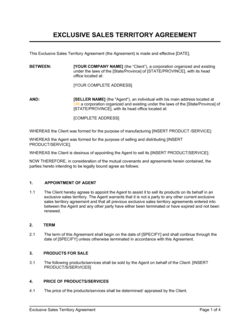
An agent sells on the supplier's behalf and never takes title to the goods; the supplier remains the contracting party with the end customer. A distributor buys from the supplier and resells independently, carrying the customer relationship and credit risk. Distribution agreements tend to give the supplier less control over pricing and customer relationships.
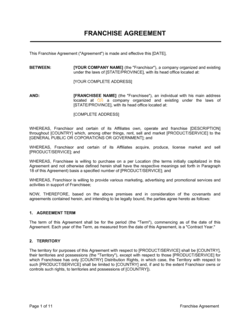
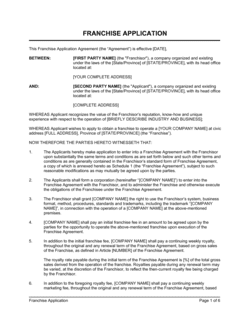
A franchise agreement grants the right to operate under the franchisor's brand and system, with extensive operational controls and ongoing fees. A distribution agreement grants sales rights only, without the brand licensing or operational standards that come with a franchise. Choose a distribution agreement when you want a channel partner to move product without replicating your full business model.
Distribution and Channel Agreement vs. OEM Agreement
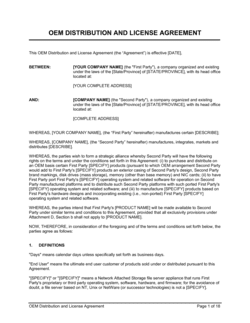
An OEM agreement allows a partner to incorporate your product into their own branded offering before resale, often with rebranding and minimum volume commitments. A standard distribution agreement requires the distributor to sell the product under the original supplier's brand. Use the OEM Distribution and License Agreement template when your partner needs to white-label or bundle your product.
Key clauses every Distribution and Channel Agreement contains
Every distribution agreement — regardless of product type or exclusivity arrangement — is built from the same core clauses; the detail varies by deal, not the structure.
Grant of rights. Defines whether rights are exclusive or non-exclusive and specifies the territory and channel in which the distributor may operate.
Product and pricing schedule. Lists the products covered, the transfer price the distributor pays, and any floor or ceiling prices the distributor must observe.
Minimum performance obligations. Sets purchase minimums or sales targets the distributor must hit to retain their rights, particularly in exclusive arrangements.
Intellectual property. Clarifies that the supplier retains ownership of all IP and grants only a limited right to use trademarks for resale purposes.
Term and renewal. States the initial contract duration and the conditions under which either party can renew or allow the agreement to lapse.
Termination and consequences. Specifies grounds for termination — breach, insolvency, performance failure — and what happens to inventory and sub-agreements on exit.
Confidentiality. Prevents the distributor from disclosing the supplier's pricing, customer data, and commercial terms to third parties.
Governing law and dispute resolution. Names the jurisdiction and forum — court or arbitration — that will resolve disputes, critical in cross-border deals.
How to write a distribution agreement
A distribution agreement needs to answer seven questions before it can be enforced; skip any one and you create a gap a partner can exploit.
1
Identify the parties and their roles
State full legal names, registered addresses, and which party is the supplier and which is the distributor.
2
Define the products and territory
List every product SKU, software title, or service covered and draw the geographic or channel boundaries precisely.
3
Choose exclusivity carefully
Decide whether rights are exclusive, non-exclusive, or sole — and tie any exclusivity grant to measurable performance minimums.
4
Set pricing, payment, and margin terms
Specify the transfer price, payment terms, currency, invoicing process, and any price-protection or most-favored-nation provisions.
5
Protect your intellectual property
Confirm the supplier retains all IP ownership and grant only the rights the distributor needs to market and sell.
6
Specify term, renewal, and termination
Set a clear start date, initial term, renewal mechanism, notice periods, and the consequences of termination for each party.
7
Add governing law and dispute resolution
Choose the governing jurisdiction and whether disputes go to litigation or arbitration — especially important for international deals.
8
Have both parties sign and retain copies
Ensure authorized signatories execute the agreement and each party stores a fully executed copy securely.
At a glance
What it is
A distribution agreement is a contract between a supplier or manufacturer and a distributor that defines the terms under which the distributor may sell or resell the supplier's products in a specified territory or channel. It covers exclusivity, pricing, performance obligations, and termination rights.
When you need one
Any time you appoint a third party to sell, resell, or sub-license your products or software, you need a signed distribution agreement before they touch your inventory or code. Without one, territory, pricing, and termination rights remain undefined and unenforceable.
Which Distribution and Channel Agreement do I need?
The right agreement depends on whether you're granting exclusivity, what you're distributing (physical goods, software, or SaaS), and the commercial relationship you want with your channel partner.
Your situation
Recommended template
Appointing a single distributor for a defined territory, no competitors
Grants one distributor sole rights in a territory, blocking parallel channels.
A third party that purchases products from a supplier and resells them to customers or sub-distributors in an assigned territory.
Exclusive distribution
An arrangement in which only one distributor may sell a supplier's products within a specified territory or channel.
Non-exclusive distribution
An arrangement in which the supplier may appoint multiple distributors in the same territory simultaneously.
Reseller
A partner authorized to sell a supplier's products or services to end customers, often without taking title to inventory.
Territory
The geographic region, market segment, or sales channel in which the distributor is permitted to operate under the agreement.
Minimum purchase commitment
A contractual obligation requiring the distributor to buy at least a specified quantity or value of products per period.
Transfer price
The price the distributor pays the supplier for products, distinct from the price the distributor charges its own customers.
OEM (Original Equipment Manufacturer)
A partner that incorporates a supplier's product into their own branded offering before reselling it to end customers.
End-user license agreement (EULA)
A contract between the software publisher and the end customer that a distributor is typically required to pass through on each sale.
Sole distribution
An arrangement where the supplier appoints only one distributor in a territory but retains the right to sell directly there themselves.
Sub-distributor
A third party appointed by the primary distributor to sell in part of the territory, subject to the supplier's approval.
Most-favored-nation (MFN) clause
A contractual term guaranteeing the distributor pricing no less favorable than that offered to any other distributor in comparable circumstances.
What is a distribution agreement?
A distribution agreement is a legally binding contract between a supplier
(or manufacturer) and a distributor that defines the terms under which the
distributor may market and sell the supplier's products within a specified
territory or channel. It governs the commercial relationship end-to-end:
what products are covered, at what price, whether rights are exclusive, what
performance is expected, and how the relationship can be ended.
Distribution agreements divide into two broad types based on exclusivity. An
exclusive distribution agreement grants one distributor the sole right to
sell in a territory — no other distributor, and often not the supplier
directly, may compete there. A non-exclusive distribution agreement lets
the supplier work with multiple distributors in the same market at the same
time. Beyond exclusivity, agreements are further specialized by product type:
physical goods, software, multimedia, SaaS platforms, and OEM-bundled products
each carry distinct IP, licensing, and support obligations that a well-drafted
agreement must address separately.
When you need a distribution agreement
Any time a third party will sell, resell, or sublicense your products on your
behalf, a signed distribution agreement should be in place before the first
order ships or the first login is provisioned. The risks of skipping this step
— contested territories, undefined pricing, uncapped liability, and
unenforceable termination rights — are difficult and expensive to correct after
the relationship has started.
Common triggers:
Appointing a regional distributor to develop a market you can't cover directly
Granting a partner the right to resell your SaaS platform to their own customers
Licensing a manufacturer to produce and distribute a product under an OEM arrangement
Expanding internationally through a local distribution partner
Authorizing a channel partner to distribute software alongside their own hardware
Setting up a reseller network to accelerate sales without adding headcount
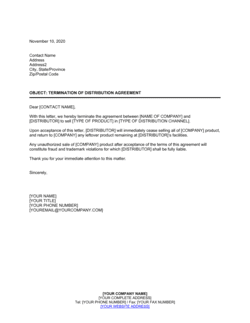
Ending an existing distributor relationship and documenting the wind-down obligations
Without a written agreement, even a successful distribution relationship can
unravel quickly when pricing changes, a territory dispute emerges, or either
party wants to exit. A clear distribution agreement eliminates those ambiguities
before they become disputes and gives both parties a reliable framework for the
entire commercial relationship.
Award-winning platform
Great Place to Work 2025
BIG Award — Product of the Year 2025
Smartest Companies 2025
Global 100 Excellence 2026
Best of the Best 2025
Create your document in 3 simple steps.
From template to signed document — all inside one Business Operating System.
1
Download or open template
Access over 3,000+ business and legal templates for any business task, project or initiative.
2
Edit and fill in the blanks with AI
Customize your ready-made business document template and save it in the cloud.
3
Share with your team
Share your files and folders with your team. Create a space of seamless collaboration.
Save time, save money, and create top-quality documents.
★★★★★
"Fantastic value! I'm not sure how I'd do without it. It's worth its weight in gold and paid back for itself many times."
Managing Director · Mall Farm
RW
Robert Whalley
Managing Director, Mall Farm Proprietary Limited
★★★★★
"I have been using Business in a Box for years. It has been the most useful source of templates I have encountered. I recommend it to anyone."
Business Owner · 4+ years
MF
Dr Michael John Freestone
Business Owner
★★★★★
"It has been a life saver so many times I have lost count. Business in a Box has saved me so much time and as you know, time is money."
Owner · Upstate Web
DM
David G. Moore Jr.
Owner, Upstate Web
Run your business with a system — not scattered tools
Stop downloading documents. Start operating with clarity. Business in a Box gives you the Business Operating System used by over 250,000 companies worldwide to structure, run, and grow their business.