Vendor Evaluation Template

Free Word download β€’ Edit online β€’ Save & share with Drive β€’ Export to PDF

1 pageβ€’20–25 min to fillβ€’Difficulty: Standard
Learn more ↓
FreeVendor Evaluation Template

At a glance

What it is
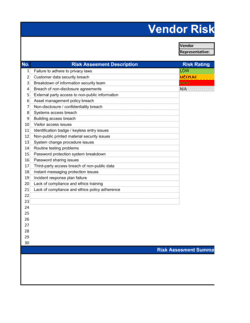
A Vendor Evaluation is a structured scorecard that rates current or prospective suppliers across weighted criteria β€” price, quality, delivery, service, compliance, and risk β€” to produce a comparable, defensible score for each vendor. This free Word download gives procurement and operations teams a consistent, editable form they can complete online and export as PDF for approval workflows or approved-supplier list records.
When you need it
Use it when selecting a new supplier, conducting a scheduled performance review of an existing vendor, or deciding whether to renew, renegotiate, or replace a supplier contract.
What's inside
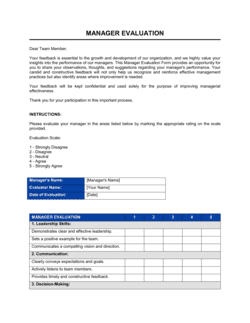
Vendor identification fields, weighted scoring criteria across six categories, a comments column for qualitative notes, a weighted total score calculation, a recommendation field, and an approver sign-off block.

What is a Vendor Evaluation?

A Vendor Evaluation is a structured scorecard that procurement and operations teams use to assess current or prospective suppliers across weighted criteria β€” price, quality, delivery, service, compliance, and risk β€” and produce a consistent, comparable score for each vendor reviewed. Rather than relying on gut feel or the most recent conversation with a sales representative, the form forces a disciplined assessment grounded in documented evidence: order history, certifications, reference checks, and competitive quotes. The result is a defensible, auditable record of why a vendor was selected, retained, or replaced.

Why You Need This Document

Without a standard vendor evaluation process, supplier selection defaults to whoever quoted last or the contact with the best relationship β€” exposing the business to quality failures, delivery disruptions, and compliance gaps that a structured review would have caught. Procurement audits, ISO certification processes, and most enterprise supplier programs require documented evidence of vendor due diligence; a stack of emails is not sufficient. A completed, signed evaluation also protects you when a vendor's performance declines β€” you have a baseline score to compare against and a process to justify moving spend to an alternative. This template gives any team a consistent, repeatable starting point in under an hour per vendor.

Which variant fits your situation?

If your situation is…Use this template
Evaluating a new supplier before awarding a first contractVendor Evaluation (Pre-qualification)
Conducting a scheduled annual performance review of an existing supplierSupplier Performance Review
Comparing three or more vendors side-by-side for a sourcing decisionVendor Comparison Matrix
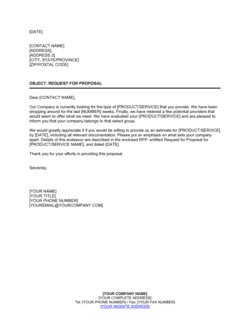
Formally requesting pricing and terms from prospective suppliersRequest for Proposal (RFP)
Documenting the agreed terms once a vendor is selectedVendor Agreement
Assessing a supplier's financial stability and credit riskVendor Credit Application
Onboarding a new approved supplier into the procurement systemNew Vendor Setup Form

Common mistakes to avoid

❌ Setting weights after scoring to favor the preferred vendor

Why it matters: Post-hoc weight adjustment invalidates the objectivity of the entire evaluation and exposes the organization to procurement fraud allegations or audit findings.

Fix: Document and lock scoring weights in a shared template header before any vendor is evaluated, and have a second reviewer confirm the weights are unchanged at sign-off.

❌ Scoring only the quoted unit price, not total cost of ownership

Why it matters: A low unit price paired with high shipping costs, short payment terms, and frequent non-conformances can make the cheapest vendor the most expensive option over a 12-month period.

Fix: Add a TCO line that captures shipping, minimum order fees, return costs, and payment terms impact before calculating the price category score.

❌ Accepting vendor-provided quality data without independent verification

Why it matters: Self-reported defect rates and certifications can be out of date or fabricated β€” scoring based on unverified data produces a false sense of due diligence.

Fix: Require copies of current certifications and at least one reference from an existing customer before assigning a quality score to any new vendor.

❌ Filing completed evaluations without an approver signature

Why it matters: An unsigned evaluation has no governance standing β€” it cannot be used to justify a vendor selection decision in an audit or a dispute about vendor performance.

Fix: Build the approver sign-off block into the template and make it a hard requirement in your procurement policy before any vendor is added to the approved-supplier list.

The 10 key fields, explained

Vendor identification

Evaluator and department

Price and value score

Quality score

Delivery and lead time score

Customer service and responsiveness score

Compliance and risk score

Weighted total score and rating

Comments and recommendation

Approver sign-off

How to fill it out

  1. 1

    Set scoring weights before evaluating any vendor

    Agree on the weight for each category β€” price, quality, delivery, service, compliance β€” before you score a single vendor. Document the weights in the form header so they are fixed for the entire evaluation round.

    πŸ’‘ For most procurement decisions, quality and delivery combined should carry at least 50% of the total weight β€” price alone is rarely the right dominant criterion.

  2. 2

    Enter vendor identification and evaluation context

    Record the vendor's legal name, contact details, product or service category, and whether this is a new vendor pre-qualification, an annual review, or a contract renewal assessment.

    πŸ’‘ Confirm the legal entity name against a business registry or the vendor's W-9 or tax certificate before filing β€” trade names and legal names differ more often than expected.

  3. 3

    Score price and total cost of ownership

    Rate the vendor's pricing against at least two competing quotes or a market benchmark. Factor in shipping, minimum order quantities, payment terms, and any documented hidden costs.

    πŸ’‘ A Net 60 payment term from a slightly more expensive vendor can be worth more than a Net 7 discount from the cheapest option β€” model the cash flow impact before scoring.

  4. 4

    Score quality using documented evidence

    Base the quality score on verifiable inputs: defect or non-conformance rate from order history, current certifications (ISO, SOC 2, etc.), and at least one reference check from an existing customer of similar scale.

    πŸ’‘ Request a sample or pilot order for any new vendor with no prior order history rather than scoring quality on brochure claims alone.

  5. 5

    Score delivery performance and compliance

    Pull on-time delivery rate from order history or reference checks. Verify that all required certifications and insurance documents are current and on file. Flag any single-source risk in the compliance field.

    πŸ’‘ Set a calendar reminder to re-verify insurance certificates and compliance certifications annually β€” they expire silently and many teams only notice during an audit.

  6. 6

    Calculate the weighted total and assign a rating tier

    Multiply each category score by its assigned weight, sum the results to produce a total out of 100, and map the total to your organization's rating tiers β€” Preferred, Approved, Conditional, or Disqualified.

    πŸ’‘ If two vendors score within 3 points of each other, revisit the qualitative comments before deciding β€” close numeric scores often reflect subjective differences the numbers don't fully capture.

  7. 7

    Complete comments and route for approver sign-off

    Write balanced qualitative observations β€” at least one strength and one gap β€” that are consistent with the numeric scores. State a clear recommendation and route the completed form to the designated approver before any purchasing or contract action.

    πŸ’‘ Attach supporting documents (quotes, certificates, reference notes) to the completed evaluation so the approver can review evidence without requesting it separately.

Frequently asked questions

What is a vendor evaluation?

A vendor evaluation is a structured scorecard used by procurement and operations teams to rate current or prospective suppliers across defined criteria β€” typically price, quality, delivery, service, compliance, and risk. Each criterion is assigned a weight, the vendor is scored on each, and the weighted totals are summed to produce a comparable, defensible overall score that supports selection or performance review decisions.

When should I use a vendor evaluation form?

Use it in three situations: before awarding a contract to a new supplier to confirm they meet your standards, during scheduled annual performance reviews of existing vendors, and when deciding whether to renew, renegotiate, or replace a supplier. It is also standard practice before adding any vendor to a formal approved-supplier list.

What criteria should a vendor evaluation include?

The six most commonly used criteria are price and value, product or service quality, on-time delivery performance, customer service and responsiveness, regulatory compliance and certifications, and financial and supply chain risk. Weight each criterion based on what matters most to your operation β€” quality and delivery typically carry the most weight in manufacturing and healthcare, while price may dominate in commodity procurement.

How do I set the scoring weights fairly?

Agree on weights with all stakeholders before any vendor is evaluated and document them in the template header. A common starting point is quality 25%, price 20%, delivery 20%, service 15%, compliance 15%, and risk 5% β€” but adjust to your business priorities. The key rule is that weights must be fixed before scoring begins, not adjusted afterward to favor a preferred vendor.

How is a vendor evaluation different from a vendor comparison matrix?

A vendor evaluation scores a single supplier against your organization's absolute standards β€” the result tells you whether that vendor meets your threshold. A vendor comparison matrix scores multiple vendors side by side on the same criteria so you can rank them relative to each other. For a sourcing decision with three or more candidates, you typically run individual evaluations first, then compile the scores into a comparison matrix.

How often should vendor evaluations be conducted?

For strategic or high-spend suppliers, annual evaluations are standard. For critical single-source suppliers, a semi-annual review reduces risk. New vendors should be evaluated before the first purchase order and again after the first 90 days once you have real order history to score against. Any vendor with more than two open corrective action requests should trigger an unscheduled review.

Does a vendor evaluation need to be signed?

A vendor evaluation does not require a legal signature to be operationally valid, but an approver sign-off block is essential for governance and audit purposes. The approver's name, title, and date confirm that a manager has reviewed and authorized the evaluation outcome before any purchasing or contracting action is taken based on it.

Can I use this template for both new and existing vendors?

Yes. The template covers both use cases. For new vendors, complete the evaluation using quotes, certifications, references, and sample orders. For existing vendors, replace estimated scores with actual order history data β€” on-time delivery rate, non-conformance count, and open corrective actions β€” to reflect real performance rather than projected capability.

How this compares to alternatives

vs Request for Proposal (RFP)

An RFP is sent to prospective vendors to solicit pricing, capabilities, and proposed approaches before you have enough information to evaluate them. A vendor evaluation scorecard is completed after responses are received β€” or after a period of actual performance β€” to score and compare vendors on consistent criteria. The RFP gathers the raw data; the evaluation scorecard processes it into a decision.

vs Vendor Agreement

A vendor evaluation determines whether a supplier meets your standards and should be selected. A vendor agreement is the binding contract executed after selection β€” covering pricing, delivery terms, warranties, and termination rights. The evaluation comes before the agreement; the agreement formalizes the outcome.

vs Purchase Order

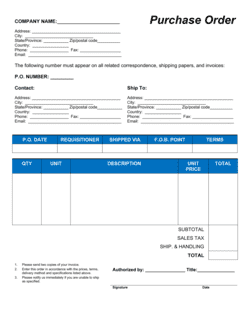
A purchase order authorizes a specific transaction with an already-approved vendor. A vendor evaluation is the upstream due diligence that determines whether a vendor is approved for purchase orders in the first place. Skipping the evaluation and issuing a purchase order directly bypasses your procurement governance.

vs Vendor Scorecard (ongoing KPI tracking)

A vendor scorecard tracks a supplier's performance metrics β€” fill rate, defect rate, lead time β€” on an ongoing monthly or quarterly basis. A vendor evaluation is a structured point-in-time assessment used for selection or periodic formal review. Scorecards feed data into evaluations; evaluations produce the go/no-go decision.

Industry-specific considerations

Manufacturing

Defect rate, non-conformance history, ISO 9001 certification status, and lead time against production schedule are the dominant scoring criteria.

Healthcare

Regulatory compliance, FDA registration, cold-chain delivery reliability, and product recall history carry elevated weight given patient safety implications.

Retail and E-commerce

On-time fill rate, packaging compliance, EDI capability, and returns handling process are critical criteria given high SKU volumes and tight replenishment cycles.

Technology / SaaS

SOC 2 certification, data security posture, SLA uptime commitments, and support responsiveness dominate evaluations for software and cloud infrastructure vendors.

Professional Services

Relevant experience, reference quality, billing transparency, and responsiveness to scope changes are the primary criteria when evaluating service vendors.

Construction

Insurance certificates, safety record, subcontractor licensing, material lead times, and payment terms against project cash flow milestones are evaluated closely.

Template vs pro β€” what fits your needs?

PathBest forCostTime
Use the templateSmall and mid-size businesses standardizing vendor selection and performance reviews without a dedicated procurement systemFree30–60 minutes per vendor evaluation
Template + professional reviewOrganizations adding custom criteria, integration with ERP or procurement software, or a formal supplier qualification program$200–$800 (procurement consultant or operations advisor)1–3 days
Custom draftedEnterprise procurement teams with ISO or industry-specific supplier audit requirements and multi-tier supply chain governance$1,500–$5,000+ (procurement specialist or quality management consultant)2–4 weeks

Glossary

Weighted Scoring
A method of rating options by multiplying each criterion's raw score by its assigned weight, so more important factors contribute proportionally more to the final total.
Approved Supplier List (ASL)
A maintained register of vendors that have passed a formal evaluation and are cleared for use in purchasing decisions.
SLA (Service Level Agreement)
A documented commitment from a vendor on measurable performance targets such as delivery lead time, defect rate, or response time.
On-Time Delivery Rate
The percentage of purchase orders a vendor fulfills by the confirmed delivery date, typically measured over a rolling 90-day or 12-month period.
Total Cost of Ownership (TCO)
The full cost of working with a vendor, including unit price, shipping, quality failures, returns, and administrative overhead β€” not just the quoted price.
Non-Conformance
A product or service delivered by a vendor that fails to meet the agreed specification, triggering a rejection, return, or corrective action request.
Corrective Action Request (CAR)
A formal document issued to a supplier requesting an explanation of a quality or delivery failure and a plan to prevent recurrence.
Single-Source Risk
The supply chain vulnerability that arises when only one vendor supplies a critical input, leaving the buyer exposed if that vendor fails to deliver.
Lead Time
The elapsed time between placing a purchase order and receiving the goods or services, including production, processing, and transit time.
Compliance Certification
A vendor-held credential β€” such as ISO 9001, SOC 2, or industry-specific accreditation β€” that independently verifies adherence to quality or security standards.

Part of your Business Operating System

This document is one of 3,000+ business & legal templates included in Business in a Box.

  • Fill-in-the-blanks β€” ready in minutes
  • 100% customizable Word document
  • Compatible with all office suites
  • Export to PDF and share electronically

Create your document in 3 simple steps.

From template to signed document β€” all inside one Business Operating System.
1
Download or open template

Access over 3,000+ business and legal templates for any business task, project or initiative.

2
Edit and fill in the blanks with AI

Customize your ready-made business document template and save it in the cloud.

3
Save, Share, Send, Sign

Share your files and folders with your team. Create a space of seamless collaboration.

Save time, save money, and create top-quality documents.

β˜…β˜…β˜…β˜…β˜…

"Fantastic value! I'm not sure how I'd do without it. It's worth its weight in gold and paid back for itself many times."

Managing Director Β· Mall Farm
Robert Whalley
Managing Director, Mall Farm Proprietary Limited
β˜…β˜…β˜…β˜…β˜…

"I have been using Business in a Box for years. It has been the most useful source of templates I have encountered. I recommend it to anyone."

Business Owner Β· 4+ years
Dr Michael John Freestone
Business Owner
β˜…β˜…β˜…β˜…β˜…

"It has been a life saver so many times I have lost count. Business in a Box has saved me so much time and as you know, time is money."

Owner Β· Upstate Web
David G. Moore Jr.
Owner, Upstate Web

Run your business with a system β€” not scattered tools

Stop downloading documents. Start operating with clarity. Business in a Box gives you the Business Operating System used by over 250,000 companies worldwide to structure, run, and grow their business.

Free Forever PlanΒ Β·Β No credit card required