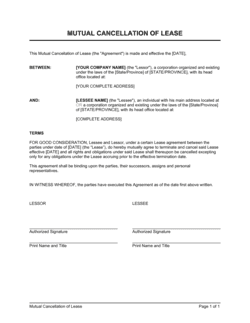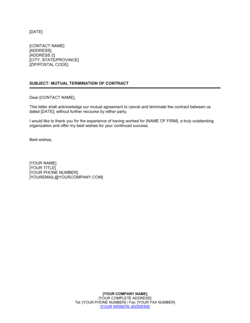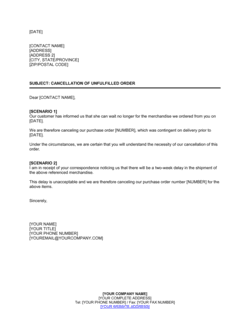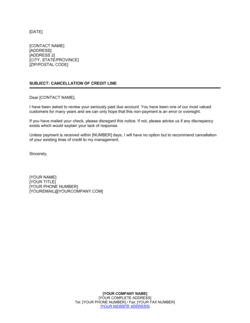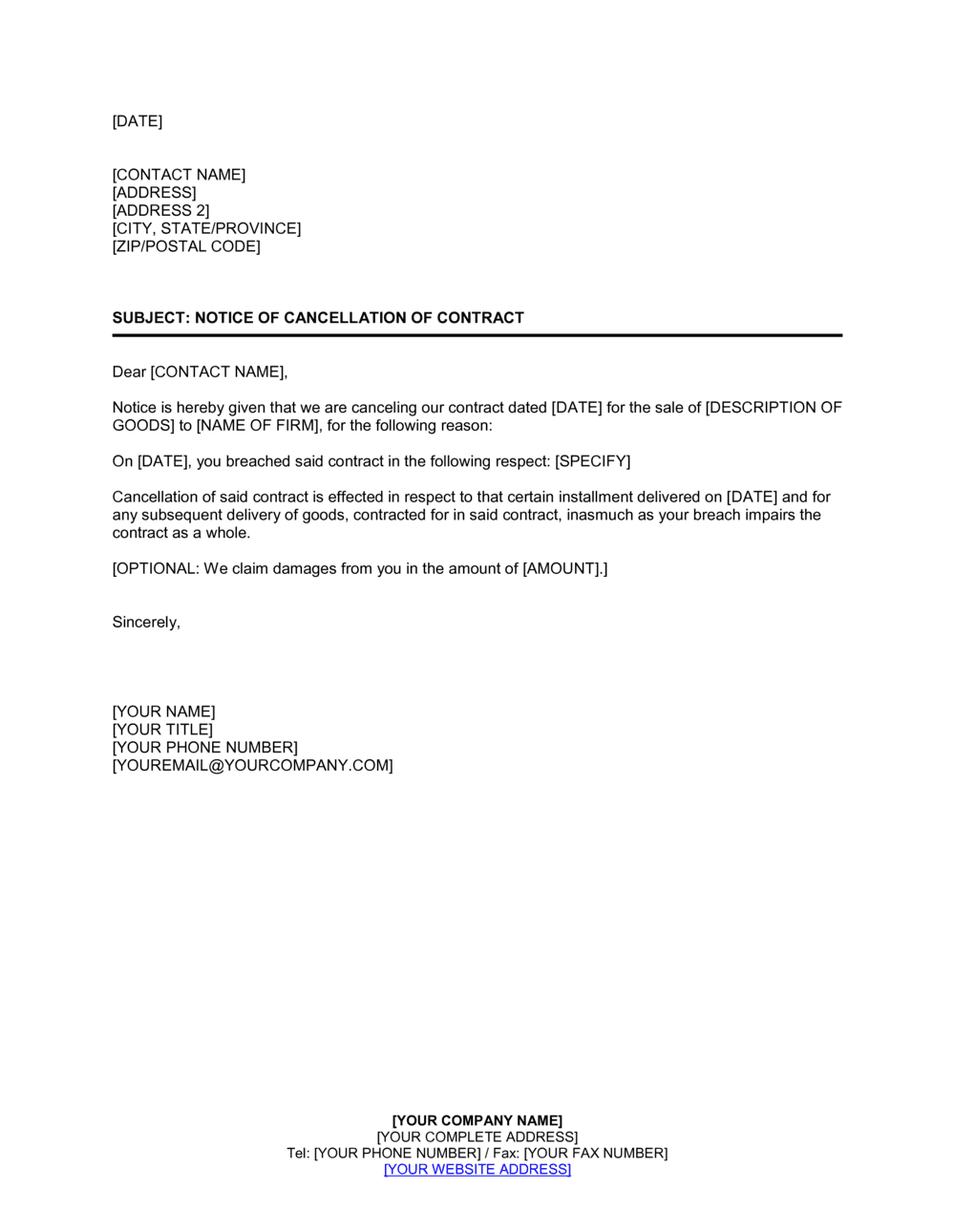
Notice of Cancellation of Contract Template

Free Word download β€’ Edit online β€’ Save & share with Drive β€’ Export to PDF

1 pageβ€’15–20 min to fillβ€’Difficulty: Standard
Learn more ↓
FreeNotice of Cancellation of Contract Template

At a glance

What it is
A Notice of Cancellation of Contract is a formal written letter one party sends to another to officially cancel an existing agreement. This free Word download gives you a structured template you can edit online and export as PDF β€” identifying the contract being cancelled, the legal or contractual basis for cancellation, and the effective date of termination.
When you need it
Use it any time you need to formally end a contract β€” whether you are exercising a statutory cooling-off right, invoking a contractual termination clause, or responding to a material breach by the other party. A written notice creates a clear, dated record that the cancellation was properly communicated.
What's inside
Sender and recipient details, contract identification, statement of the cancellation right being exercised, effective cancellation date, instructions on returning property or settling outstanding obligations, and a formal closing with signature block.

What is a Notice of Cancellation of Contract?

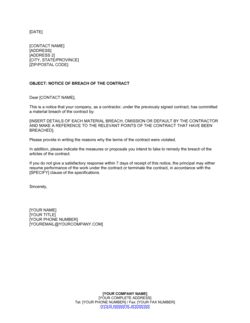
A Notice of Cancellation of Contract is a formal written letter sent by one party to another to officially end an existing agreement. It identifies the contract being cancelled by name, date, and reference number; states the specific legal or contractual right being exercised β€” such as a statutory cooling-off period, a termination-for-convenience clause, or a material breach by the other party; and sets the exact effective date on which the contract ceases to have force. Unlike a casual email or verbal conversation, a properly drafted cancellation notice creates an unambiguous, timestamped record that the cancellation was communicated in accordance with the contract's terms.

Why You Need This Document

Ending a contract informally β€” by phone, by stopping payment, or by simply walking away β€” exposes you to claims that the contract is still in force, that you owe outstanding fees, or that you are in breach for non-performance. A written notice of cancellation closes those risks by documenting the basis, the date, and the instructions for settling any remaining obligations. Without it, the other party can argue they never received proper notice, that the required notice period was not observed, or that you acted outside your cancellation rights β€” turning a straightforward exit into a protracted dispute. This template gives you the correct structure in under 15 minutes, with every essential component β€” contract identification, cancellation basis, effective date, and post-cancellation obligations β€” in the right place and in language that is clear enough to be acted on immediately.

Which variant fits your situation?

If your situation is…Use this template
Cancelling within a statutory cooling-off period after signingNotice of Cancellation of Contract
Ending a contract because the other party failed to performNotice of Termination for Breach of Contract
Giving formal notice at the end of a fixed-term contractContract Non-Renewal Letter
Cancelling a purchase order before goods are shippedPurchase Order Cancellation Letter
Ending a service agreement with a defined notice periodService Contract Termination Letter
Cancelling a subscription or recurring billing arrangementSubscription Cancellation Letter
Disputing a charge and requesting a refund after cancellationRefund Request Letter

Common mistakes to avoid

❌ Using ambiguous cancellation language

Why it matters: Phrases like 'we intend to cancel' or 'we may need to terminate' do not constitute valid notice β€” courts have found that notice must be unconditional and unequivocal to be effective.

Fix: State clearly that you 'hereby provide formal notice of cancellation effective [DATE].' Remove any conditional or tentative wording from the notice.
❌ Miscalculating the effective date

Why it matters: An effective date that falls inside the required notice period makes the cancellation premature, potentially exposing the sender to breach-of-contract liability for the shortfall period.

Fix: Re-read the notice clause in the contract, count the days correctly (calendar vs. business), and double-check the effective date before sending.

❌ Failing to identify the specific contract

Why it matters: A vague reference to 'our agreement' without a date or reference number creates ambiguity β€” especially if multiple contracts exist between the same parties β€” and the notice may be deemed ineffective.

Fix: Include the full contract title, execution date, and any reference number in the subject line and body of the notice.

❌ Sending to the wrong contact

Why it matters: Most contracts specify where and to whom notices must be sent. Delivering to a general inbox or a non-designated contact can invalidate the notice if the other party argues non-receipt.

Fix: Check the 'Notices' clause in the contract for the designated recipient address and delivery method, and follow it exactly.

The 8 key clauses, explained

Sender and recipient identification

In plain language: Names and addresses of the party sending the notice and the party receiving it, along with the date the letter is sent.

Sample language
[SENDER FULL NAME / COMPANY NAME] [SENDER ADDRESS] [DATE] To: [RECIPIENT FULL NAME / COMPANY NAME] [RECIPIENT ADDRESS]

Common mistake: Sending to a general inbox rather than the individual named in the contract β€” the notice may be challenged as improperly delivered if it never reached the right person.

Contract identification

In plain language: References the exact contract being cancelled β€” its full title, date of execution, and any reference or agreement number.

Sample language
Re: Notice of Cancellation β€” [CONTRACT TITLE], dated [DATE OF ORIGINAL CONTRACT], Agreement No. [REFERENCE NUMBER]

Common mistake: Describing the contract vaguely as 'our agreement' without date or reference number. If the parties have multiple agreements, the wrong one may be treated as cancelled.

Statement of cancellation intent

In plain language: A clear, unambiguous statement that the sender is formally cancelling the contract β€” not merely expressing dissatisfaction or requesting a change.

Sample language
Please be advised that [SENDER NAME] hereby provides formal notice of cancellation of the above-referenced contract, effective [EFFECTIVE DATE].

Common mistake: Using hedged language like 'we may need to cancel' or 'we are considering termination.' Courts treat ambiguous language as not constituting valid notice.

Basis for cancellation

In plain language: The specific legal or contractual right being exercised β€” statutory cooling-off, a termination-for-convenience clause, or material breach by the other party.

Sample language
This cancellation is made pursuant to [Section X of the Contract / applicable consumer protection law] due to [REASON β€” e.g., the statutory cooling-off period / failure to deliver by the agreed date of [DATE]].

Common mistake: Omitting the basis entirely and simply stating 'we are cancelling.' If the right to cancel is later disputed, having the basis on record is essential.

Effective date of cancellation

In plain language: The specific date the cancellation takes effect, calculated in accordance with the required notice period in the contract or applicable statute.

Sample language
This cancellation shall take effect on [EFFECTIVE DATE], being [X] days' written notice from the date of this letter as required under [Clause X / applicable law].

Common mistake: Stating the cancellation is 'immediate' when the contract requires a notice period. An invalid cancellation date does not shorten the notice period β€” it may make the entire notice defective.

Obligations upon cancellation

In plain language: Instructions on what each party must do following cancellation β€” returning property, settling outstanding invoices, ceasing use of licensed materials, or completing work in progress.

Sample language
Upon the effective date, [RECIPIENT NAME] is requested to [cease all services / return all materials / issue a refund of $[AMOUNT] for prepaid amounts covering the period after [DATE]].

Common mistake: Leaving post-cancellation obligations unstated and assuming the other party will act reasonably. Explicit written instructions reduce the likelihood of a dispute over returned deposits or in-progress deliverables.

Dispute resolution reference

In plain language: A brief statement directing the recipient to the contract's dispute resolution clause if they wish to contest the cancellation.

Sample language
Should you dispute this cancellation, please refer to the dispute resolution provisions set out in [Section X] of the Contract and respond in writing within [X] business days.

Common mistake: Threatening litigation in the body of the notice before the dispute resolution process has been attempted β€” this can expose the sender to a counterclaim for acting in bad faith.

Signature block

In plain language: The sender's name, title, signature, and contact information, confirming who is authorizing the cancellation on behalf of the sending party.

Sample language
Sincerely, [AUTHORIZED SIGNATORY NAME] [TITLE] [COMPANY NAME] [EMAIL] [PHONE]

Common mistake: Having the notice signed by someone without authority to bind the company β€” such as a junior employee rather than an officer or director named in the contract.

How to fill it out

  1. 1

    Retrieve the original contract

    Locate the contract you are cancelling and note its full title, execution date, reference number, and the names of both parties exactly as they appear in the document.

    πŸ’‘ Match the party names in your notice precisely to the names in the contract β€” a name discrepancy is the most common reason a cancellation notice is challenged.

  2. 2

    Identify the cancellation right you are exercising

    Read the contract for a termination-for-convenience clause, a notice period, or a cooling-off provision. If no contractual right applies, determine whether a statutory right (consumer protection law, FTC cooling-off rule) covers your situation.

    πŸ’‘ If you are relying on a breach by the other party, document the specific breach in writing before sending the notice β€” a prior cure letter strengthens your position significantly.

  3. 3

    Calculate the effective date

    Count forward from today's date by the required notice period stated in the contract or applicable statute. Enter that specific calendar date as the effective cancellation date.

    πŸ’‘ If the contract says '30 days' notice,' confirm whether it means calendar days or business days β€” the difference can be 8–12 days on a month with holidays.

  4. 4

    Draft the cancellation basis clearly

    Write one or two sentences stating the specific clause or statutory provision under which you are cancelling. Be factual and specific β€” avoid emotional language or detailed grievances in the notice itself.

    πŸ’‘ Keep the body of the notice factual and brief. A detailed complaint letter is a different document; the notice just needs to be legally clear.

  5. 5

    State any post-cancellation obligations

    List what you expect the other party to do on or before the effective date β€” return deposits, cease services, deliver outstanding work, or issue credits.

    πŸ’‘ Attach copies of any relevant invoices or payment records referenced in the obligations section so the recipient has all supporting documents in one package.

  6. 6

    Send via a traceable delivery method

    Send the notice by email with read receipt, certified mail, or another delivery method that produces a timestamped record of receipt. Match the delivery method required by the contract's notice clause if one is specified.

    πŸ’‘ Keep a copy of the sent email, delivery confirmation, or signed postal receipt in your files β€” delivery proof is the first thing needed if the cancellation is disputed.

Frequently asked questions

What is a notice of cancellation of contract?

A notice of cancellation of contract is a formal written letter that one party sends to the other to officially end an existing agreement. It identifies the contract being cancelled, states the legal or contractual basis for the cancellation, specifies the effective date, and sets out any post-cancellation obligations such as returning deposits or ceasing services. It creates a dated written record that the cancellation was properly communicated.

Do I need to give a reason to cancel a contract?

It depends on the basis for cancellation. Exercising a termination-for-convenience clause typically requires no reason β€” only proper notice. Cancelling during a statutory cooling-off period also requires no reason. If you are cancelling due to a material breach by the other party, stating the specific breach protects your position. Providing a reason is always good practice even when it is not strictly required.

What is a cooling-off period and when does it apply?

A cooling-off period is a statutory window β€” typically 3 to 14 days depending on the jurisdiction and type of contract β€” during which a consumer may cancel a contract without penalty and without giving a reason. It commonly applies to door-to-door sales, telemarketing contracts, and certain financial products. In the US, the FTC's Cooling-Off Rule gives 3 business days on most sales made at a buyer's home or at certain off-premises locations. Cooling-off rights do not typically apply to business-to-business contracts.

How much notice do I need to give to cancel a contract?

The required notice period is stated in the contract itself β€” commonly 30, 60, or 90 days for service agreements. If the contract is silent on notice, the applicable statutory minimum in your jurisdiction applies, which is typically 30 days for most commercial contracts. Count the days carefully from the date the notice is received (not sent) and confirm whether the contract specifies calendar days or business days.

Does a cancellation notice need to be signed?

A signature is not always legally required for a cancellation notice to be effective, but it is strongly recommended. A signed notice from an authorized party is harder to dispute and clearly establishes who sent it and in what capacity. If the contract's notice clause requires a signed document, that requirement must be followed for the notice to be valid.

Can I cancel a contract by email?

In most cases, yes β€” email is a widely accepted form of written notice for contract cancellations. However, some contracts specifically require certified mail, courier, or hand delivery. Check the notices clause in your contract before sending. When using email, request a read receipt or follow up with a delivery confirmation, and retain a copy of the sent email and any reply as evidence of receipt.

What happens after I send a cancellation notice?

The contract remains in effect until the effective date stated in the notice. Both parties must continue to perform their obligations until that date. After the effective date, new performance obligations cease. Any pre-cancellation amounts owed (invoices, deposits, work completed) must still be settled. If the other party disputes the cancellation, refer to the contract's dispute resolution clause for next steps.

What is the difference between cancellation and termination?

In practice, the terms are often used interchangeably. Technically, cancellation typically refers to ending a contract under a specific right β€” such as a cooling-off period or a breach β€” with potential remedies preserved. Termination is a broader term covering any consensual or contractual ending of an agreement. Both result in the parties' obligations ceasing as of the effective date. The distinction matters most when the contract uses one term and your notice uses the other.

How this compares to alternatives

vs Termination Letter (Breach of Contract)

A termination letter for breach is used when the other party has failed to perform a material obligation and you are ending the contract as a result. A cancellation notice is broader β€” it covers cooling-off rights, convenience terminations, and breaches alike. Use a breach-specific letter when you need to document wrongdoing and preserve a damages claim.

vs Mutual Termination Agreement

A mutual termination agreement requires both parties to sign and formally agree to end the contract. A cancellation notice is a unilateral act β€” one party informs the other. Use a mutual termination when both parties want a clean settlement; use a cancellation notice when you are acting on a right the contract or statute already gives you.

vs Contract Amendment

A contract amendment changes specific terms of an existing agreement while keeping it in force. A cancellation notice ends the agreement entirely. If you want to renegotiate rather than walk away, an amendment is the right document.

vs Breach of Contract Notice

A breach of contract notice informs the other party they are in default and typically gives them a cure period to remedy the breach before the contract is cancelled. A cancellation notice is the next step β€” sent after a cure period expires or when no cure right applies. The two documents are often used in sequence.

Industry-specific considerations

Professional Services

Cancelling retainer agreements, consulting contracts, or agency service arrangements when the scope or relationship has broken down.

Retail and E-commerce

Exercising consumer cooling-off rights on purchase contracts or cancelling supplier agreements when delivery terms are not met.

Construction and Trades

Cancelling subcontractor agreements, materials supply contracts, or equipment rental arrangements within the required notice window.

Real Estate and Property

Cancelling property service contracts, maintenance agreements, or management arrangements with the required notice under the contract terms.

Template vs pro β€” what fits your needs?

PathBest forCostTime
Use the templateAnyone cancelling a standard commercial or consumer contract under a clear contractual or statutory rightFree10–15 minutes
Template + professional reviewCancellations involving disputed breaches, significant prepaid amounts, or complex post-cancellation obligations$100–$300 for a brief legal review1–2 days
Custom draftedHigh-value contracts, franchise agreements, or situations where the other party is likely to contest the cancellation$300–$800+2–5 days

Glossary

Cancellation
The act of formally ending a contract before or at the conclusion of its term, typically under a specific right granted by statute or the contract itself.
Cooling-off period
A legally defined window β€” often 3 to 14 days depending on jurisdiction and contract type β€” during which a party may cancel a contract without penalty and without giving a reason.
Effective date
The specific calendar date on which the cancellation takes legal effect and the parties' obligations under the contract cease.
Notice period
The amount of advance warning β€” typically expressed in days β€” a party must give before a cancellation or termination becomes effective.
Material breach
A failure by one party to perform a core obligation of the contract, significant enough to justify the other party treating the contract as cancelled.
Termination for convenience
A contractual right to end an agreement at any time without cause, subject only to giving the required notice period.
Rescission
The legal undoing of a contract as though it never existed β€” typically available when a contract was induced by fraud, misrepresentation, or duress.
Mutual termination
Both parties agree in writing to end the contract simultaneously, releasing each other from further obligations.
Force majeure
A clause excusing non-performance β€” or allowing cancellation β€” when an extraordinary event outside both parties' control prevents the contract from being fulfilled.
Consideration
Something of value exchanged by each party to form a binding contract; when a contract is cancelled, parties typically agree on how any unearned consideration is returned.

Part of your Business Operating System

This document is one of 3,000+ business & legal templates included in Business in a Box.

  • Fill-in-the-blanks β€” ready in minutes
  • 100% customizable Word document
  • Compatible with all office suites
  • Export to PDF and share electronically

Create your document in 3 simple steps.

From template to signed document β€” all inside one Business Operating System.
1
Download or open template

Access over 3,000+ business and legal templates for any business task, project or initiative.

2
Edit and fill in the blanks with AI

Customize your ready-made business document template and save it in the cloud.

3
Save, Share, Send, Sign

Share your files and folders with your team. Create a space of seamless collaboration.

Save time, save money, and create top-quality documents.

β˜…β˜…β˜…β˜…β˜…

"Fantastic value! I'm not sure how I'd do without it. It's worth its weight in gold and paid back for itself many times."

Managing Director Β· Mall Farm
Robert Whalley
Managing Director, Mall Farm Proprietary Limited
β˜…β˜…β˜…β˜…β˜…

"I have been using Business in a Box for years. It has been the most useful source of templates I have encountered. I recommend it to anyone."

Business Owner Β· 4+ years
Dr Michael John Freestone
Business Owner
β˜…β˜…β˜…β˜…β˜…

"It has been a life saver so many times I have lost count. Business in a Box has saved me so much time and as you know, time is money."

Owner Β· Upstate Web
David G. Moore Jr.
Owner, Upstate Web

Run your business with a system β€” not scattered tools

Stop downloading documents. Start operating with clarity. Business in a Box gives you the Business Operating System used by over 250,000 companies worldwide to structure, run, and grow their business.

Start freeΒ Β·Β No credit card required