Employee Job and Motivation Improvement Meeting Template

Free Word download β€’ Edit online β€’ Save & share with Drive β€’ Export to PDF

2 pagesβ€’25–30 min to fillβ€’Difficulty: Standardβ€’Signature requiredβ€’Legal review recommended
Learn more ↓
FreeEmployee Job and Motivation Improvement Meeting Template

At a glance

What it is
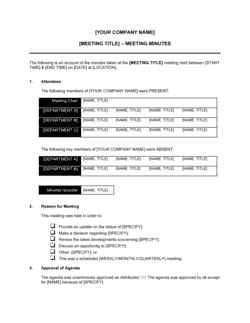
An Employee Job and Motivation Improvement Meeting document is a structured written record of a formal meeting between a manager and an employee to address performance concerns, identify motivational barriers, and agree on measurable improvement goals. This free Word download gives you a ready-to-use template you can edit online, customize to your workplace, and export as PDF for signing and filing in the employee's personnel record.
When you need it
Use it when an employee's performance, engagement, or conduct has declined noticeably and verbal coaching has not produced the needed change. It is also appropriate when an employee has flagged personal or role-related barriers that are affecting their output and a structured conversation is needed to realign expectations.
What's inside
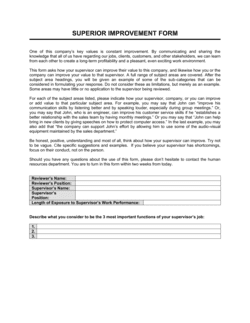
Employee and manager identification, a description of current performance concerns, a root-cause and motivation assessment, specific measurable improvement targets with deadlines, a support and resources commitment from the employer, a follow-up schedule, and signatures from both parties acknowledging the meeting and its terms.

What is an Employee Job and Motivation Improvement Meeting?

An Employee Job and Motivation Improvement Meeting is a formal, documented meeting between a manager and an employee designed to address specific performance shortfalls or engagement concerns, diagnose the motivational and structural barriers contributing to them, and establish a written record of agreed improvement goals and employer support commitments. Unlike an informal coaching conversation, this meeting produces a signed document that enters the employee's personnel file and serves as evidence of a fair and transparent process. It functions as a critical step in progressive discipline β€” situated after verbal feedback and before a formal Performance Improvement Plan β€” giving both parties a structured opportunity to realign expectations and responsibilities before the situation escalates.

Why You Need This Document

Without a written record of a formal improvement meeting, employers face significant legal exposure when termination becomes necessary. Employment tribunals and courts across every major jurisdiction ask whether the employer identified the problem clearly, communicated it to the employee, gave a genuine opportunity to improve, and offered meaningful support β€” and they look for documentary evidence of each step. An undocumented improvement conversation is treated as if it never happened. Beyond legal protection, a properly completed improvement meeting document creates accountability on both sides: the employee knows exactly what is expected and by when, and the manager is on record committing to the support resources that make improvement realistic. This template gives you the structure to conduct that meeting correctly the first time, reducing the risk of a costly wrongful termination claim and improving the odds that the employee actually turns their performance around.

Which variant fits your situation?

If your situation is…Use this template
Employee has persistent, measurable underperformance requiring a formal 30/60/90-day planPerformance Improvement Plan (PIP)
Employee conduct or behavior is the issue rather than job performanceEmployee Warning Letter
This meeting leads to a decision to terminate employmentEmployee Dismissal Letter
Employee's role or responsibilities need to be formally revised after the meetingJob Description Template
Following up with a written record of agreed goals and timelinesEmployee Action Plan
Meeting is part of an annual or mid-year review cycleEmployee Performance Review
Employee requests a formal record of manager feedback and development commitmentsEmployee Development Plan

Common mistakes to avoid

❌ Using vague performance descriptions

Why it matters: Phrases like 'bad attitude' or 'not trying hard enough' cannot be measured, are easily challenged at tribunal, and give the employee no clear target to aim for.

Fix: Replace every adjective with a specific observable behavior or measurable outcome: 'Response time to client emails exceeded 48 hours on six occasions in March' is specific and defensible.

❌ Skipping the motivational root-cause section

Why it matters: An improvement document that records only failures β€” with no evidence the employer tried to understand barriers β€” is frequently cited by employment tribunals as evidence of an unfair process.

Fix: Dedicate at least one section to recording the employee's stated perspective and the employer's assessment of contributing factors, even if the two assessments differ.

❌ No employer support commitment

Why it matters: Courts in the UK, Canada, and the EU regularly find that improvement processes were set up to fail when the employer imposed targets without offering any resources to help the employee meet them.

Fix: Document at least two concrete support commitments β€” a training session, a check-in schedule, a tool, or an EAP referral β€” with a named person responsible for each.

❌ Obtaining the signature after escalation begins

Why it matters: A meeting record signed weeks after the meeting date is treated as a retrospective document, not a contemporaneous one β€” it carries far less evidentiary weight in a dispute.

Fix: Close every improvement meeting by having both parties sign before they leave the room, or within 24 hours via tracked electronic signature.

❌ Omitting interim check-in dates

Why it matters: A 90-day improvement period with no documented check-ins looks like the employer set up the employee to fail and then terminated at the deadline without genuine support.

Fix: Schedule at least two documented interim check-ins within the improvement window and record brief notes from each in the employee's file.

❌ Using the same template language for every employee regardless of role

Why it matters: Generic targets like 'improve performance' have no meaning for a software engineer whose role requires specific delivery metrics versus a sales rep measured on revenue.

Fix: Customize the improvement targets section for the specific role, using the metrics and standards already established in the employee's job description or offer letter.

The 10 key clauses, explained

Employee and manager identification

In plain language: Records the full name, job title, department, and direct manager of the employee involved, along with the date and location of the meeting.

Sample language
Meeting Date: [DATE] | Employee: [EMPLOYEE FULL NAME], [JOB TITLE], [DEPARTMENT] | Manager: [MANAGER FULL NAME], [MANAGER TITLE] | Location: [OFFICE / REMOTE PLATFORM]

Common mistake: Using informal first names only. If the document is later used in a disciplinary or legal proceeding, missing full legal names and job titles create identification ambiguity.

Purpose and context of the meeting

In plain language: States clearly that the meeting is a formal improvement discussion β€” not a casual check-in β€” and references any prior verbal or written feedback the employee has received.

Sample language
This meeting is a formal Job and Motivation Improvement Meeting convened to address concerns regarding [EMPLOYEE NAME]'s performance in [AREA(S)]. Prior feedback was provided on [DATE(S)] via [verbal / written warning / email].

Common mistake: Framing the meeting as 'just a chat' in writing. Vague language undermines the document's value as a record of formal notice if the situation escalates to termination.

Description of performance concerns

In plain language: Documents specific, factual observations about where performance or motivation has fallen short β€” including dates, metrics, and incidents.

Sample language
The following performance concerns have been identified: (1) [SPECIFIC ISSUE] observed on [DATE(S)], resulting in [IMPACT]; (2) [SPECIFIC ISSUE] measured against target of [METRIC] β€” actual result was [METRIC].

Common mistake: Using vague adjectives like 'poor attitude' or 'lacks effort' without citing specific observable behaviors or measurable outcomes. Vague descriptions are easily challenged in an employment tribunal.

Motivational and root cause assessment

In plain language: Records the employee's perspective on barriers to their performance β€” including workload, personal circumstances, unclear expectations, or role fit β€” and the manager's assessment of underlying causes.

Sample language
Employee's stated barriers: [EMPLOYEE'S EXPLANATION]. Manager's assessment of contributing factors: [MANAGER ASSESSMENT]. Agreed root cause(s): [AGREED CAUSE(S)] / To be further reviewed at follow-up.

Common mistake: Skipping this section entirely and treating it as a one-way notification. Courts and tribunals look for evidence that the employer genuinely attempted to understand and address the employee's perspective.

Improvement targets and SMART goals

In plain language: Sets out specific, measurable improvement objectives the employee must meet, with clear deadlines and the metrics that will be used to assess progress.

Sample language
Improvement Target 1: [DESCRIPTION] β€” to be achieved by [DATE], measured by [METRIC]. Improvement Target 2: [DESCRIPTION] β€” to be achieved by [DATE], measured by [METRIC]. Review date: [DATE].

Common mistake: Setting targets without defining the measurement method. 'Improve customer satisfaction' is unenforceable; 'Achieve a minimum CSAT score of 4.0/5.0 by [DATE]' is not.

Employer support and resources commitment

In plain language: Documents what the employer will provide to help the employee succeed β€” training, mentoring, adjusted workload, clearer instructions, or access to an Employee Assistance Program (EAP).

Sample language
The Company commits to providing the following support: (1) [TRAINING / COACHING] by [DATE]; (2) [RESOURCE / TOOL / SCHEDULE CHANGE]; (3) Weekly check-ins with [MANAGER NAME] on [DAY].

Common mistake: Omitting the support commitment entirely. Employers who document only what the employee must do β€” without their own obligations β€” face claims that the improvement process was set up to fail.

Consequences of non-improvement

In plain language: States clearly what will happen if the employee does not meet the agreed targets by the review date β€” typically escalation to a formal PIP, a final written warning, or termination.

Sample language
Failure to meet the improvement targets set out above by [REVIEW DATE] may result in [further disciplinary action / a formal Performance Improvement Plan / termination of employment], subject to [COMPANY]'s disciplinary policy.

Common mistake: Using soft language like 'may need to reconsider the arrangement.' Ambiguous consequence language is interpreted in the employee's favor in most jurisdictions and removes the deterrent effect.

Follow-up schedule

In plain language: Sets specific check-in dates between the improvement meeting and the final review date to track progress and provide documented interim feedback.

Sample language
Progress check-ins are scheduled for: [DATE 1], [DATE 2], [DATE 3]. Final review: [DATE]. Meeting notes from each check-in will be added to this record and provided to the employee within [2] business days.

Common mistake: Scheduling only a final review with no interim check-ins. If the employee fails at the end, courts will ask whether the employer monitored and supported progress throughout β€” not just at the deadline.

Employee acknowledgment and response

In plain language: Provides space for the employee to acknowledge receipt of the document and, optionally, to record their own comments or objections in writing.

Sample language
I, [EMPLOYEE NAME], acknowledge receipt of this Job and Motivation Improvement Meeting record dated [DATE]. I understand that signing does not necessarily indicate agreement with every finding. Employee comments (optional): [COMMENTS / N/A].

Common mistake: Refusing to include the acknowledgment clause because the employee might write an objection. An employee's written objection on the record is actually protective β€” it shows the process was transparent and the employee had a voice.

Signatures and date

In plain language: Captures dated signatures from both the employee and the manager, and optionally an HR witness, to confirm the meeting took place and the document was reviewed.

Sample language
Employee Signature: ___________________ Date: ________ | Manager Signature: ___________________ Date: ________ | HR Representative (if applicable): ___________________ Date: ________

Common mistake: Dating the document on the day it was typed rather than the day it was signed. A document dated before the meeting occurred undermines its credibility as a contemporaneous record.

How to fill it out

  1. 1

    Complete the identification block before the meeting

    Enter the employee's full legal name, job title, department, manager name, and the scheduled meeting date and location. Confirm these details match the employee's current HR file.

    πŸ’‘ Prepare this section at least 24 hours in advance and share the blank document with the employee before the meeting so they arrive informed, not ambushed.

  2. 2

    Document specific performance concerns with evidence

    List two to four concrete, fact-based performance concerns. For each, cite a specific date or period, a measurable outcome, and the expected standard. Avoid adjectives β€” use numbers and behaviors.

    πŸ’‘ Pull from prior email threads, project reports, or attendance records. Documented evidence in the meeting record is far harder to dispute than a manager's recollection.

  3. 3

    Record the motivational and root-cause discussion

    During the meeting, ask the employee to explain their perspective on the performance gaps. Record their stated barriers and your own assessment. Note any factors the employer can address β€” unclear role expectations, resource gaps, or personal circumstances.

    πŸ’‘ Use open-ended questions: 'What's been getting in the way?' signals a genuine improvement intent and is documented as evidence of a fair process.

  4. 4

    Set two to four SMART improvement targets

    Co-develop targets where possible β€” employees who help define the goals are more likely to pursue them. Each target must include a specific metric and a deadline. Write them into the template before both parties sign.

    πŸ’‘ Set a 30-day intermediate milestone even if the overall improvement period is 60 or 90 days. Early wins build momentum; early misses trigger a faster response.

  5. 5

    Commit employer support in writing

    List at least two specific things the employer will do to support the employee β€” training, a revised workload, clearer instructions, or EAP access. Assign a person responsible for each and a delivery date.

    πŸ’‘ If you cannot identify any meaningful support to offer, revisit whether the role itself is designed reasonably β€” courts apply the same question.

  6. 6

    State consequences clearly and proportionately

    Write the specific consequence for non-improvement β€” PIP, final written warning, or termination β€” and reference the company disciplinary policy by name. Do not soften the language to the point of ambiguity.

    πŸ’‘ Check your disciplinary policy before writing this clause. The consequence stated in the meeting record must align with what the policy permits at this stage of progressive discipline.

  7. 7

    Schedule follow-up dates and obtain signatures

    Enter at least two interim check-in dates and the final review date. Have both parties sign and date the document at the close of the meeting. Provide the employee with a copy immediately.

    πŸ’‘ If an employee refuses to sign, note 'Employee declined to sign on [DATE] β€” document provided to employee by [METHOD]' and have an HR witness countersign. A refusal does not invalidate the record.

Frequently asked questions

What is an employee job and motivation improvement meeting?

An employee job and motivation improvement meeting is a formal documented conversation between a manager and an employee to address declining performance or engagement, identify underlying barriers, and agree on measurable improvement goals. Unlike an informal check-in, it produces a signed written record that becomes part of the employee's personnel file and serves as evidence of a fair process if the situation escalates to disciplinary action or termination.

When should an employer hold a job and motivation improvement meeting?

Hold one when verbal coaching has not resolved a performance or engagement issue β€” typically after one or two informal conversations have been documented without improvement. It is also appropriate when an employee has raised barriers to performance that require a structured employer response, or when a performance review reveals a gap significant enough to warrant formal documentation. It precedes a Performance Improvement Plan (PIP) in most progressive discipline frameworks.

Does the employee have to sign the improvement meeting document?

In most jurisdictions, an employee cannot be legally compelled to sign. However, the document remains valid even without the employee's signature. If an employee refuses, note the refusal in writing, have an HR witness counter-sign, and provide the employee with a copy. The refusal itself becomes part of the record and does not prevent the employer from proceeding with the improvement process.

What is the difference between a job improvement meeting and a Performance Improvement Plan (PIP)?

A job improvement meeting is a single documented discussion that identifies concerns, agrees on goals, and sets a review date. A Performance Improvement Plan (PIP) is a more formal, multi-page document issued when earlier improvement steps have not worked β€” typically covering 30 to 90 days with structured weekly check-ins and explicit termination consequences. The improvement meeting is step two in progressive discipline; the PIP is step three or four.

Can this meeting record be used as evidence in an employment dispute?

Yes β€” a properly completed, contemporaneously signed improvement meeting record is admissible evidence in wrongful termination claims, unfair dismissal proceedings, and employment tribunal hearings. It demonstrates that the employer identified the problem, communicated it clearly, gave the employee a fair opportunity to improve, and offered support. An unsigned, undated, or vaguely worded record offers far less protection.

Should HR be present at an employee job improvement meeting?

HR presence is not legally required in most jurisdictions, but it is strongly recommended for any meeting that may lead to disciplinary action. An HR representative provides an independent witness, ensures the process follows company policy, and reduces the risk of claims that the meeting was conducted improperly. In the UK, employees have a statutory right to be accompanied by a colleague or trade union representative at formal disciplinary or grievance meetings.

How long should the improvement period be?

The appropriate length depends on the nature of the concern. Behavioral issues can reasonably be addressed within 2 to 4 weeks. Skill or performance gaps typically require 30 to 90 days to allow time for training and genuine behavior change. The period should be long enough to give the employee a realistic opportunity to improve, but not so long that poor performance continues unchecked. Set interim check-in dates at no more than two-week intervals throughout the period.

Does holding an improvement meeting prevent an employer from terminating shortly afterward?

No β€” an improvement meeting does not create an implied contract of continued employment in most jurisdictions. However, terminating an employee within days of an improvement meeting, without allowing the improvement period to run, significantly weakens the employer's position in a wrongful termination or unfair dismissal claim. The meeting record is most protective when followed by a genuine improvement period and documented follow-up reviews before any termination decision is made.

What happens if the employee meets the improvement targets?

If the employee meets all agreed targets by the review date, document the outcome in writing, acknowledge the improvement formally, and close the improvement record. This positive outcome should be noted in the employee's personnel file alongside the original meeting record. If performance later regresses, the documentation history allows the employer to escalate faster on a second occasion.

How this compares to alternatives

vs Performance Improvement Plan (PIP)

A PIP is a structured 30–90 day remediation program issued after earlier improvement steps have failed, with weekly check-ins, explicit milestones, and a clear termination trigger. A job improvement meeting is a single documented conversation that precedes a PIP in the progressive discipline sequence β€” less formal, shorter, and oriented toward identifying barriers before imposing a structured plan.

vs Employee Warning Letter

A warning letter is a unilateral written notice from employer to employee documenting a specific policy breach or conduct failure. A job improvement meeting document is bilateral β€” it records a two-way conversation, captures the employee's perspective, and commits the employer to support. Use a warning letter for clear-cut conduct violations; use the improvement meeting for performance and motivational issues that require diagnosis.

vs Employee Performance Review

A performance review is a scheduled, often annual, assessment of overall job performance against predefined criteria. A job improvement meeting is triggered by a specific performance decline between review cycles and is focused narrowly on closing a defined gap within a defined period. Reviews are forward-looking assessments; improvement meetings are remediation tools.

vs Employee Action Plan

An employee action plan is a standalone goal-setting document that can be used proactively for any employee β€” not just those with performance concerns. A job improvement meeting document specifically frames the context as a response to identified shortfalls and includes motivational root-cause analysis and consequence language. Use an action plan for development; use the improvement meeting document for formal remediation.

Industry-specific considerations

Retail and hospitality

High staff turnover means documented improvement meetings are critical to demonstrate fair process before termination β€” avoiding costly tribunal claims in high-volume hiring environments.

Professional services

Billable utilization rates and client satisfaction scores provide clear measurable targets for improvement clauses, making this document straightforward to complete with quantified goals.

Healthcare

Regulatory and patient-safety obligations mean performance concerns must be documented carefully β€” improvement meeting records often feed into credentialing or licensing review processes.

Manufacturing

Shift-based environments with union agreements require improvement meeting documentation to align with collective bargaining procedures and avoid grievance filings.

Technology / SaaS

Remote and hybrid workplaces require virtual meeting records with electronic signatures and timestamped platform evidence to establish that the meeting occurred.

Financial services

Regulatory fitness-and-propriety requirements mean that performance or conduct concerns must be formally documented to support any notification to licensing bodies if employment ends.

Jurisdictional notes

United States

At-will employment means termination without a documented improvement process is generally lawful, but written records significantly reduce exposure to wrongful termination, discrimination, and retaliation claims. Several states β€” including California, New York, and New Jersey β€” have robust employee protections that make contemporaneous documentation especially important. Ensure the improvement targets and consequence language are consistent with any applicable handbook policies.

Canada

Canadian common law requires employers to demonstrate they gave employees fair notice and a genuine opportunity to improve before terminating for cause without severance. An undocumented or poorly conducted improvement process typically results in a finding of termination without cause, triggering common-law notice obligations of up to one month per year of service. Quebec employers must conduct meetings and prepare documents in French for provincially regulated workplaces.

United Kingdom

UK employment law requires employers to follow a fair dismissal procedure under the Employment Rights Act 1996 and the ACAS Code of Practice on Disciplinary and Grievance Procedures. Employees have a statutory right to be accompanied at formal disciplinary meetings. Failure to follow the ACAS Code can result in a tribunal increasing any unfair dismissal award by up to 25%. This document should reference the company's disciplinary policy and allow the employee to respond in writing.

European Union

EU member states impose varying procedural requirements before termination for poor performance β€” France, Germany, and Spain require documented warnings, consultation periods, and in some cases works council involvement. GDPR applies to any personal data recorded in the improvement meeting document, including health-related motivational factors. Employers should retain improvement meeting records only as long as necessary under applicable data retention policies, typically no longer than the statute of limitations for employment claims in the relevant member state.

Template vs lawyer β€” what fits your deal?

PathBest forCostTime
Use the templateHR managers and small business owners conducting improvement meetings for non-senior employees in a single jurisdictionFree20–30 minutes per meeting
Template + legal reviewEmployers dealing with senior employees, union-represented staff, or a history of prior disputes with the employee$200–$500 for an employment lawyer or HR consultant review1–2 days
Custom draftedHigh-risk terminations in regulated industries, cross-border employees, or situations where litigation is likely$800–$2,500+3–7 days

Glossary

Performance Improvement Meeting
A structured formal meeting between a manager and an employee to discuss specific performance shortfalls and agree on corrective actions and timelines.
Motivational Barrier
A personal, environmental, or organizational factor that reduces an employee's engagement or willingness to perform β€” such as unclear expectations, workload imbalance, or interpersonal conflict.
SMART Goals
Improvement targets that are Specific, Measurable, Achievable, Relevant, and Time-bound β€” used to define what success looks like at the end of the improvement period.
Performance Improvement Plan (PIP)
A formal, extended document that follows an improvement meeting when concerns are not resolved, setting out a structured 30–90 day remediation program with consequences for non-compliance.
At-Will Employment
An employment arrangement, common in most US states, where either party may end the relationship at any time for any lawful reason β€” but written documentation still protects the employer against wrongful termination claims.
Constructive Dismissal
A legal doctrine where an employer's failure to address workplace conditions adequately β€” or to document improvement efforts β€” can be used by an employee to claim they were effectively forced to resign.
Progressive Discipline
A sequential approach to performance management that escalates responses β€” verbal warning, written warning, improvement meeting, PIP, termination β€” to give employees a fair opportunity to correct behavior.
Acknowledgment Signature
The employee's signature on the improvement meeting document confirming they received and understood its contents β€” not necessarily that they agree with every assessment.
Root Cause Analysis
The process of identifying the underlying reason for a performance problem β€” distinguishing between a skills gap, a motivational issue, a resource deficiency, or an external personal factor.
Follow-Up Review
A scheduled meeting set at the time of the improvement discussion to assess whether the agreed targets have been met within the defined period.

Part of your Business Operating System

This document is one of 3,000+ business & legal templates included in Business in a Box.

  • Fill-in-the-blanks β€” ready in minutes
  • 100% customizable Word document
  • Compatible with all office suites
  • Export to PDF and share electronically

Create your document in 3 simple steps.

From template to signed document β€” all inside one Business Operating System.
1
Download or open template

Access over 3,000+ business and legal templates for any business task, project or initiative.

2
Edit and fill in the blanks with AI

Customize your ready-made business document template and save it in the cloud.

3
Save, Share, Send, Sign

Share your files and folders with your team. Create a space of seamless collaboration.

Save time, save money, and create top-quality documents.

β˜…β˜…β˜…β˜…β˜…

"Fantastic value! I'm not sure how I'd do without it. It's worth its weight in gold and paid back for itself many times."

Managing Director Β· Mall Farm
Robert Whalley
Managing Director, Mall Farm Proprietary Limited
β˜…β˜…β˜…β˜…β˜…

"I have been using Business in a Box for years. It has been the most useful source of templates I have encountered. I recommend it to anyone."

Business Owner Β· 4+ years
Dr Michael John Freestone
Business Owner
β˜…β˜…β˜…β˜…β˜…

"It has been a life saver so many times I have lost count. Business in a Box has saved me so much time and as you know, time is money."

Owner Β· Upstate Web
David G. Moore Jr.
Owner, Upstate Web

Run your business with a system β€” not scattered tools

Stop downloading documents. Start operating with clarity. Business in a Box gives you the Business Operating System used by over 250,000 companies worldwide to structure, run, and grow their business.

Start freeΒ Β·Β No credit card required