1
Enter the corporation's full legal name and jurisdiction
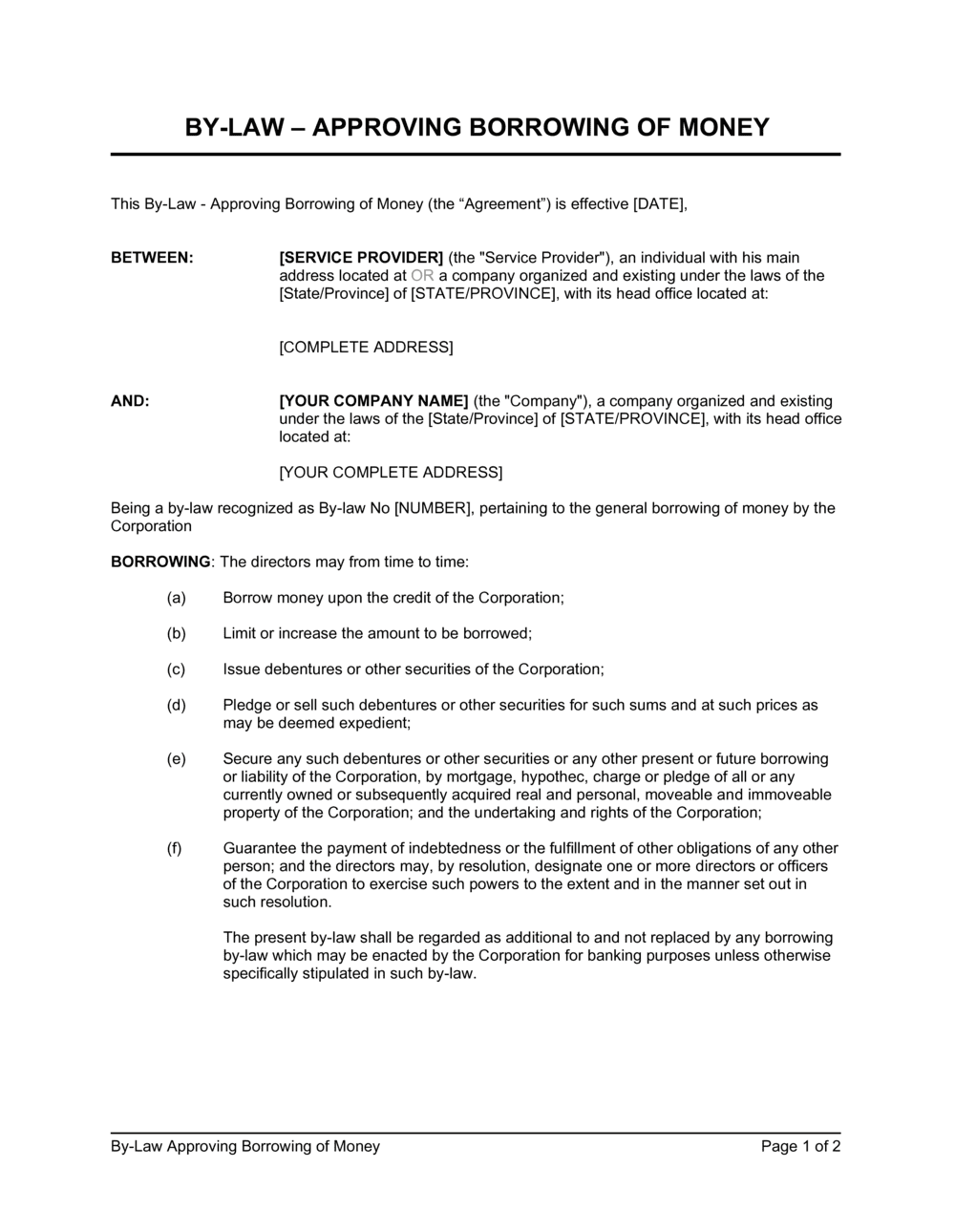
Use the exact registered corporate name as it appears on the certificate of incorporation — including any 'Ltd.', 'Inc.', or 'Corp.' suffix. Enter the jurisdiction of incorporation in the recitals and governing law clause.
💡 Cross-reference the corporate registry search before completing the document — a name discrepancy between the resolution and the lender's search can delay closing.
2
Confirm borrowing authority in your constating documents
Review your articles of incorporation and existing by-laws to confirm the board (or shareholders, if required) has authority to pass this borrowing resolution without additional approvals. Note any borrowing limits already imposed by your articles.
💡 If your articles require shareholder approval for borrowings above a threshold, obtain a shareholder resolution in addition to the board resolution — or the by-law may be ultra vires.
3
Set the borrowing limit
Insert a specific maximum aggregate dollar amount the corporation is authorized to borrow. This should be large enough to cover the current facility plus reasonable headroom for future draws or fees.
💡 Set the limit at 110–120% of the facility amount to avoid having to pass a supplementary resolution if loan fees or interest are capitalized into the principal.
4
Designate authorized signatories by title and name
List at least two officers by title (President, CFO, Secretary) and include their full names. Specify whether they may sign individually or only jointly — most lenders accept individual signing authority for operational efficiency.
💡 Name a backup signatory in case the primary officer is unavailable at closing — this single step prevents the most common last-minute borrowing delays.
5
Describe the security to be granted
Identify the type of security the lender requires — general security agreement over all personal property, real property mortgage, or a specific pledge of named assets — and confirm the corporation has clear title to those assets.
💡 Run a PPSA (Canada), UCC (US), or Companies House (UK) search before execution to identify any prior security interests that must be subordinated or discharged.
6
Pass the resolution at a properly constituted meeting
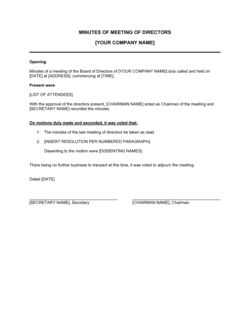
Call a board of directors meeting with proper notice (or obtain signed written consents from all directors), confirm quorum is present, and record the vote in the meeting minutes before the by-law is signed.
💡 Many jurisdictions permit directors to pass resolutions by unanimous written consent without a formal meeting — confirm this option in your applicable corporate statute to save scheduling time.
7
Have the corporate secretary certify the resolution
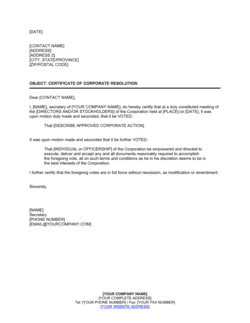
The corporate secretary should sign a certification page confirming the resolution was duly passed, attach it to a true copy of the by-law, and affix the corporate seal if one is maintained.
💡 Prepare at least three certified copies at execution — one for the lender, one for the corporate minute book, and one for the officer executing the loan documents.
8
Deliver the certified copy to the lender before closing
Provide the lender's counsel with the certified resolution as part of the closing condition checklist. Confirm receipt and that no further corporate approvals are required.
💡 Ask the lender for their form of corporate certificate checklist at least five business days before closing — some institutions require additional officer certificates or good-standing certificates alongside the resolution.